
How to Adapt When Plans Fall Apart at the Last Minute
Keep the goal in view, then ask what’s still possible with the people, time and space you have. Tell everyone what changed before they build their own workarounds.
Fictional story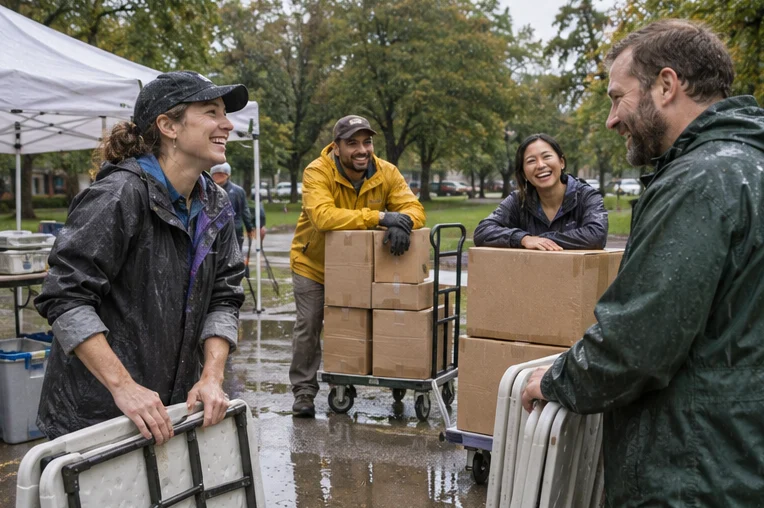
What to try
- Identify what absolutely has to happen today and what you can reschedule.
- Send an update with three details: what changed, where people should go, and when the next decision will be made.
The message in the rain
An hour before the neighborhood swap, Oscar learned that water had pooled in the courtyard. People were already on their way. A volunteer proposed postponing everything and another began moving boxes into a narrow hallway. Oscar felt both plans were happening too quickly.
Finding the part they could save
The group listed what visitors actually needed: somewhere dry to leave items and someone to explain the new plan. They asked the library next door whether its foyer was available and moved the larger items to a later date. Oscar sent one clear update to people on the list.
Decisions that cost time
The first update sent several visitors to the library’s main door, where there was no one to meet them. Oscar wanted to rewrite the whole announcement. A volunteer suggested putting a person at the original entrance to redirect arrivals. They could do that immediately, then update the instructions when someone had time to check the address.
A different response to delay
Two volunteers found the original plan easier to let go once there was an alternative. Oscar noticed he needed a few minutes to understand the constraints. The next time a plan changed, he asked for that pause instead of staying quiet while someone else decided.
What helped people reset
Later the volunteers compared how they had reacted. One started moving boxes because a physical task gave her something useful to do. Oscar needed a minute to see what was still possible. When they planned the next event, they agreed to meet briefly before changing everyone’s assignment. They also wrote one backup location into the plan.
Compare your own setbacks
Use the adaptability assessment to reflect on moments when plans shift. Look for the conditions that made it easier to regroup, ask for help, or try another approach.
What if I need more time before deciding?
Ask for a short pause and give the group a time to reconvene. In the meantime, take a reversible step such as warning people that the original plan may change.
Further reading
- What to Do When Everything Feels Urgent
Explore a related situation and a different assessment.